Bunker climate change
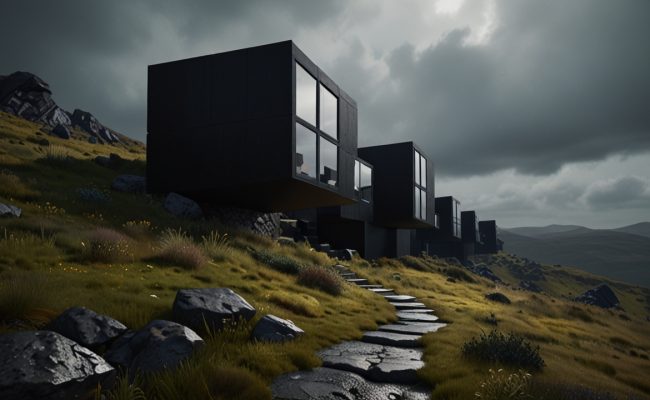
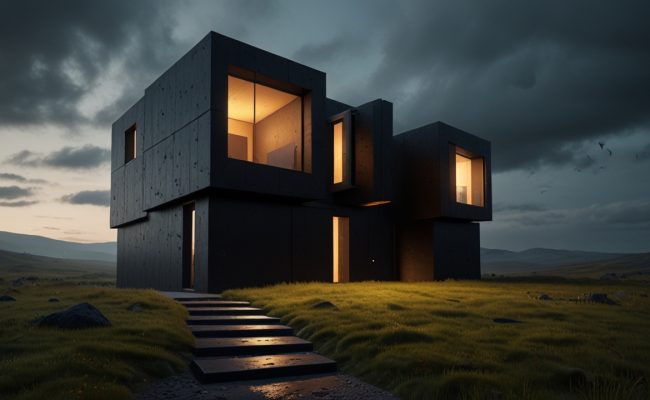
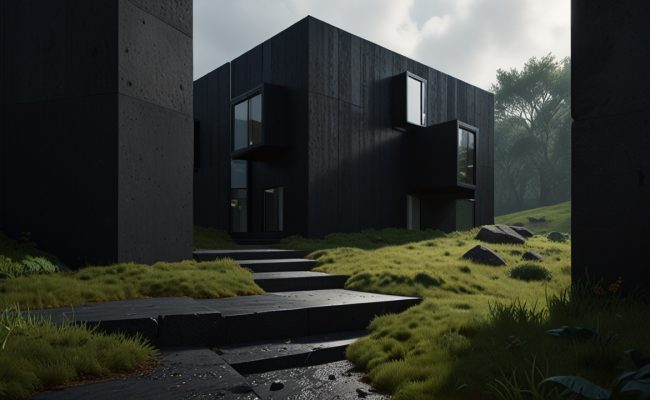
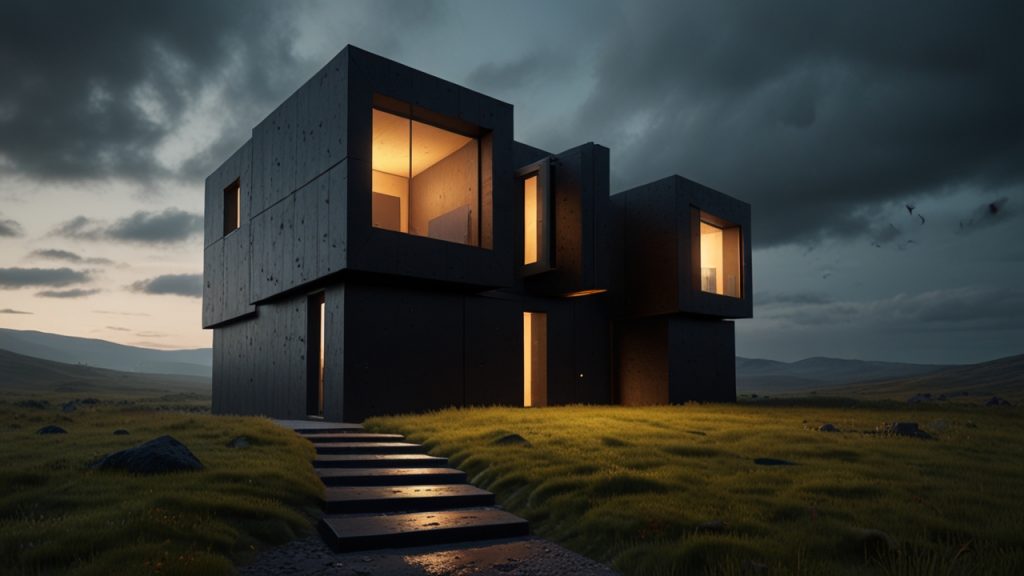
The building is characterized by its stark, monolithic presence. It's composed of rectilinear blocks, stacked and cantilevered in a somewhat asymmetric fashion, creating a sculptural yet imposing form. The primary material appears to be a dark, pcharcoal-grey, matte finish – possibly concrete, steel, or a dark stone cladding – which contributes significantly to its severe and resilient appearance. Windows are strategically placed, appearing as illuminated cut-outs within the dark facade.
They are large, suggesting a desire to connect with the outside world, but their limited number and precise placement also convey a sense of controlled exposure and protection. The design emphasizes solidity, strength, and a sense of permanence. There's a noticeable absence of decorative elements; the architecture relies purely on its form, materials, and relationship with the landscape for its impact. A set of simple, wide steps leads up to what appears to be the main entrance, reinforcing the strong, grounded presence of the structure.
Materials and Construction:
Reinforced Concrete/Steel: The dark, solid exterior hides heavily reinforced concrete or steel construction, designed to withstand extreme weather events like high winds, heavy precipitation, or even seismic activity.
Thermal Mass: The thick walls and substantial materials would provide excellent thermal mass, helping to regulate interior temperatures and reduce reliance on external energy sources for heating and cooling. This is crucial for energy independence in a fluctuating climate.
Impermeable Exterior: The dark cladding would be highly weather-resistant, possibly self-cleaning and designed to minimize maintenance in harsh conditions. It would be sealed against water penetration, ensuring the interior remains dry even during prolonged storms.
Defensive Features:
Limited Openings: The strategic and relatively few windows suggest a focus on security and protection from external threats, be they environmental or human. These windows would likely be highly reinforced, perhaps with bulletproof or impact-resistant glass, and integrated shutters for extreme conditions.
Subterranean Elements: The low-slung nature of the lowest block, almost blending into the earth, hints at potential underground components. A true climate change bunker would almost certainly have extensive subterranean levels for:
Storage: Long-term food, water, and fuel storage.
Utilities: Secure housing for crucial infrastructure like water filtration systems, power generators ( solar or geothermal), and waste management.
Shelter: Deeper, more protected living or emergency spaces.
Access: Hidden or well-secured entry points.
Self-Sufficiency Systems:
Water: Rainwater harvesting integrated into the roof system, with large underground cisterns for purification and storage.
Energy: Solar panels (perhaps flush-mounted or integrated into the roofline to maintain the sleek aesthetic, or located discreetly elsewhere on the property) and possibly a wind turbine or geothermal system to ensure continuous power.
Air Filtration: Advanced HVAC systems with robust air filtration to protect against airborne pollutants or extreme external temperatures.
Food Production: While not visible, there might be integrated hydroponic or aeroponic systems indoors, or a secure, protected greenhouse nearby, to ensure a supply of fresh produce.